
10 Important Ziyarat Places in Madinah: A Complete Visitor Guide
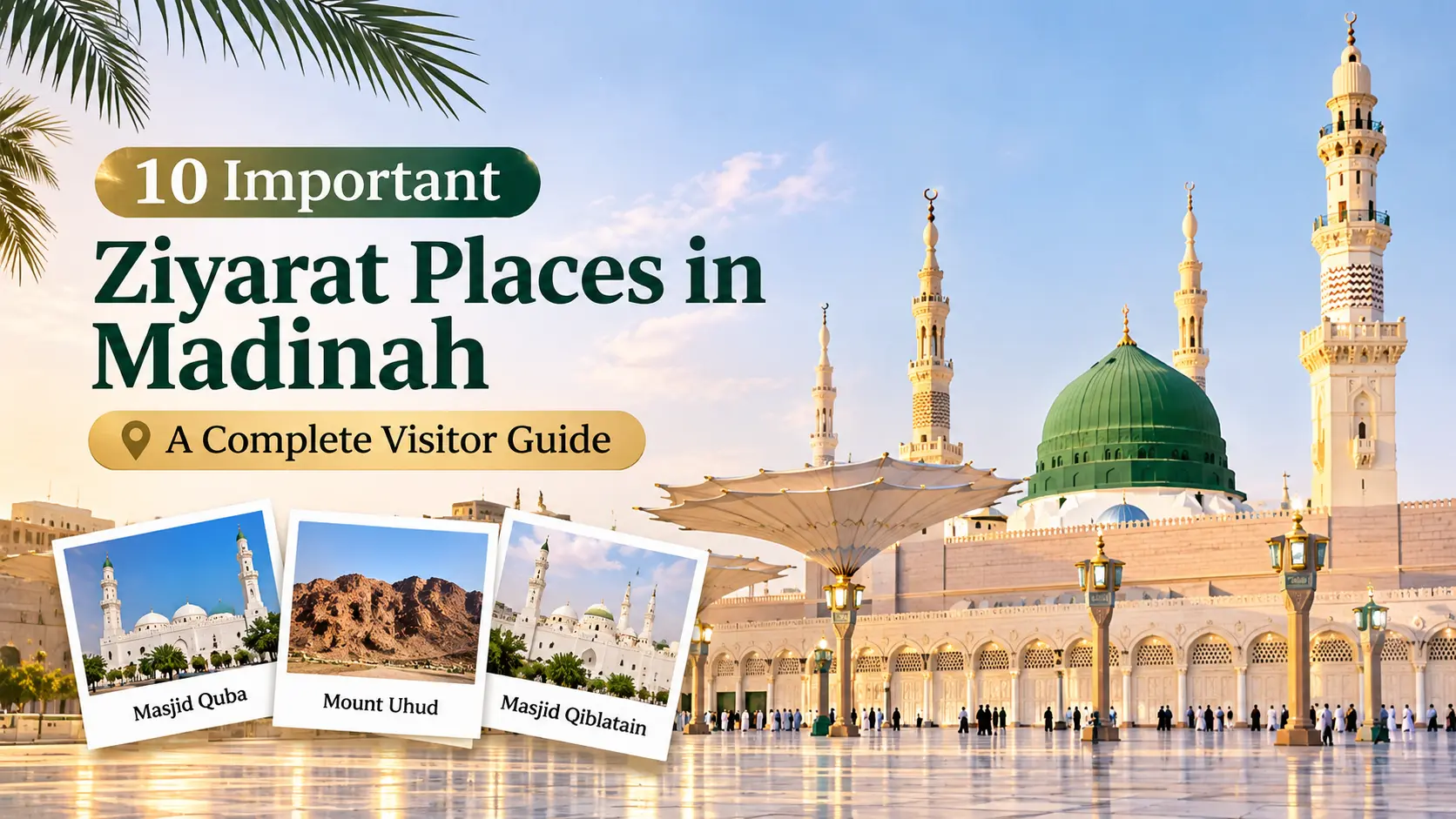
Quick answer: The key ziyarat places in Madinah are Masjid Nabawi, Rawdah Sharif, Masjid Quba, Mount Uhud, Jannatul Baqi, Masjid Qiblatain, the Seven Mosques, Masjid Jummah, Masjid Ghamama and Masjid Al-Miqat. Group them by area, book your Rawdah permit on Nusuk, and avoid rushing.
If you are searching for ziyarat places in Madinah, start with Masjid Nabawi and Rawdah Sharif. Then add Quba, Uhud, Jannatul Baqi and the other historic sites below. You do not need to see everything in one day.
Some are mosques. Some are battle sites. Others mark turning points in the Prophet's ﷺ life. Each one gives you a clearer picture of early Islam.
UK pilgrims often ask us what to see in Madinah and how to fit it in. This guide answers both. For a wider view of both holy cities, read our Umrah ziyarat places guide.
You will learn where each site is, why it matters, and how to visit with less stress.
10 Important Ziyarat Places in Madinah You Should Know
These ten sites cover Madinah's key Islamic history, from the first mosque to the plain of Uhud. Visit them in small groups, not in one rushed day.
Here are the best places to visit in Madinah for pilgrims. Each madinah ziyarat place below has a short history, a location and one practical tip.
1. Masjid Nabawi (The Prophet's Mosque)
The Prophet ﷺ built this mosque after the Hijrah. It is the centre of the city and the heart of every visit.
Greet the Prophet ﷺ with calm and respect. Send your salutations quietly and move on when asked.
Pro Tip: Allow extra time around prayers. The courtyards fill fast, and rushing between crowds spoils the experience.
2. Masjid Quba (The First Mosque in Islam)
Quba was the first mosque built after the Prophet ﷺ reached Madinah. The Quran speaks of "a mosque founded on righteousness from the first day", and many scholars link this verse to Quba (Surah At-Tawbah 9:108).
It lies a short drive south of Masjid Nabawi. The Prophet ﷺ used to visit it on Saturdays, riding or walking, as narrated in Sahih al-Bukhari.
Pro Tip: Check prayer times first. Then link Quba with Masjid Jummah, which sits in the same direction.
3. Mount Uhud (Jabal Uhud)
The Battle of Uhud took place here in 3 AH. Hamza (may Allah be pleased with him) and many other companions are buried at the martyrs' cemetery.
You can also see Archers' Hill, where the archers were stationed. It is a few kilometres north of Masjid Nabawi.
Pro Tip: Wear comfortable shoes and go early in hot months. Stay out of fenced or restricted areas.
4. Jannatul Baqi (Al-Baqi Cemetery)
Jannatul Baqi lies just east of Masjid Nabawi. It is the historic burial ground of many companions and members of the Prophet's ﷺ family.
Entry rules apply, and they differ for men and women. Follow the posted instructions and the guards' directions.
Pro Tip: Never plan your day around entering the cemetery. Treat access as a bonus, and make dua calmly from wherever you are allowed to stand.
5. Masjid Qiblatain (The Mosque of Two Qiblas)
Here, the direction of prayer changed from Jerusalem to the Kaaba. That is why people call it the Mosque of Two Qiblas.
It sits north-west of the city centre. Visit to understand the history, and respect the mosque's own rules.
6. The Seven Mosques (Sab'ah Masajid)
These mosques mark the area linked to the Battle of the Trench (Khandaq). Visitors include them in Madinah sightseeing to see where the defenders held their line.
The name refers to a historic group of mosques. It does not mean seven required stops.
7. Masjid Jummah
Tradition links this mosque to the Prophet's ﷺ journey from Quba into Madinah. It is where he led the first Jumu'ah prayer.
It lies in the Quba direction, so it fits easily into one trip.
8. Masjid Ghamama
This small mosque stands a short walk from Masjid Nabawi. Historians link it to the Prophet's ﷺ Eid prayers.
Because it is so close, you can add it to a central-area visit without hiring transport.
9. Masjid Al-Miqat (Dhu Al-Hulayfah)
This is the Miqat for pilgrims leaving Madinah for Makkah. Many enter Ihram here for Umrah. Review the Ihram rules for Umrah before you arrive.
Pro Tip: Prepare for Ihram at your hotel. Facilities at the Miqat get busy, especially when coaches arrive together.
10. Rawdah Sharif (Riyad ul Jannah)
Rawdah Sharif is a blessed area inside Masjid Nabawi. It is not a separate site elsewhere in Madinah.
Entry needs a permit booked through Nusuk. The Ministry of Hajj and Umrah lists the service as free through Nusuk. Slots are limited, so check the app as soon as your visa is ready.
Pro Tip: Never pay a third party for a Rawdah permit. Book only inside the official app, and re-read the current rules before you travel.
How to Plan Your Madinah Ziyarat Visit
Plan your madinah ziyarat guide by area, not by list. Central Madinah first, then Quba, then the north.
Most visitors waste time zigzagging across the city. Grouping the sites fixes that.
1. Central Madinah
Masjid Nabawi
Rawdah Sharif
Jannatul Baqi
Masjid Ghamama
2. Quba Area
Masjid Quba
Masjid Jummah
3. Northern Madinah
Mount Uhud
Seven Mosques
4. Other Important Sites
Masjid Qiblatain
Dhu Al-Hulayfah
This is a suggested grouping, not a fixed route. Confirm timings and access before you go.
A common scenario: Picture a family from Birmingham with two elderly parents. They spend the first morning around Masjid Nabawi and Ghamama. They rest at the hotel after Dhuhr.
On day two, they book a Madinah Ziyarat tour by car for Quba and Jummah. Uhud waits for day three. Nobody is exhausted, and everyone remembers the visits.
My honest view: two relaxed mornings beat one exhausting day. Madinah is calm, so let your itinerary match it.
If your trip includes Makkah too, plan those visits early. Our Makkah ziyarat places guide helps you split your time.
Pro Tip: Ask your hotel or transport provider for a printed route. Drivers move faster when the stops are already grouped.
Practical Tips Before Visiting Ziyarat Places in Madinah
Book your Rawdah permit early, plan around prayer times, and pace yourself. These three habits prevent most problems.
• Check Rawdah appointments: Use the official Nusuk app and follow the latest permit instructions.
• Dress for comfort: Wear modest clothing and supportive footwear.
• Plan around prayers: Add extra time near Masjid Nabawi for crowds.
• Think about elderly visitors: Avoid long walks and arrange suitable transport. Our notes on family Umrah packages explain how hotel distance affects daily walking.
• Drink water: This matters most in summer.
• Respect local rules: Follow mosque staff and signs at historic sites.
• Confirm transport costs: Check fares or quotes before you leave.
For opening arrangements and visitor guidance, the official Visit Saudi website is a sound reference.
Common Mistakes to Avoid
Scenario one: A first-time traveller lands in Madinah and plans to book the Rawdah permit later. Slots are tight, and the best times go quickly. Booking early would have saved that stress.
Scenario two: Another pilgrim tries to see all ten places in one day. By Uhud, they are tired and hot. They remember the queue, not the history.
• Trying to see every site in a single trip.
• Leaving the Rawdah permit until the last minute.
• Skipping rest breaks with elderly relatives.
• Assuming Jannatul Baqi will always be open to enter.
How Much Does Madinah Ziyarat Cost?
The Rawdah permit is free through Nusuk. Transport and tour costs vary, so confirm the price before you travel.
We do not quote fixed Ziyarat prices here, because they change often. Your cost depends on:
• Bus, taxi or private vehicle.
• Number of passengers.
• Pickup and drop-off points.
• Length of tour and number of stops.
• Whether a licensed guide is included.
Ask for the total price in writing. Then check what the ride includes.
Final Thoughts on Ziyarat Places in Madinah
Madinah's historic sites are best seen slowly and with a plan. A simple route and an early permit make the difference.
Visiting the ziyarat places in Madinah helps you connect with the city's Islamic heritage. Group your stops, book Rawdah early, and keep time for prayer.
Planning Umrah from the UK? Ask for a free Umrah quote and speak to an Umrah expert about your Madinah nights and travel.
Frequently Asked Questions About Ziyarat Places in Madinah
These are the five questions pilgrims ask us most about Madinah sightseeing.
1. What are the most important ziyarat places in Madinah?
Masjid Nabawi and Rawdah Sharif come first. Masjid Quba, Mount Uhud, Jannatul Baqi and Masjid Qiblatain follow. Most visitors add the Seven Mosques, Masjid Jummah and Masjid Ghamama if time allows.
2. How many days are enough for Madinah Ziyarat?
It depends on your pace, mobility and free time. Many pilgrims split the sites across two or three relaxed mornings. Do not treat any set number of days as required.
3. Do I need a permit to visit Rawdah Sharif?
Yes. You book the permit through the official Nusuk app, and it is free. Slots are limited, so check the latest instructions as soon as your visa is ready.
4. Can I visit Madinah Ziyarat places without a private car?
Yes. Public buses, taxis and organised tours all serve the main sites. Check the official bus app for current routes and fares.
5. Are all Ziyarat places in Madinah free to visit?
Visiting the mosques and historic sites is generally free. You pay for transport and for any guided tour. Check current access rules before you go, as some areas have limited entry.