
Historical Places in Makkah: Their Islamic History and Significance
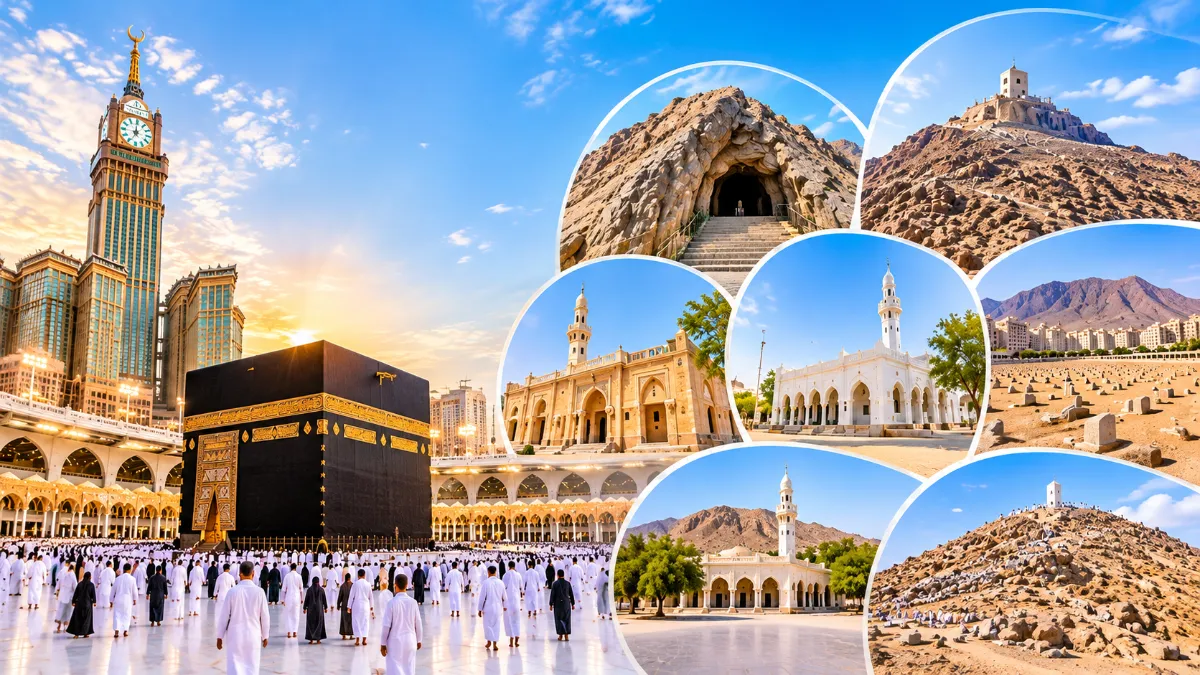
The main historical places in Makkah are the Cave of Hira, Jabal Thawr, Jannat al-Mualla, Masjid al-Jinn, Mina's historic mosques, Al-Hudaybiyyah and Arafat. Each marks a key moment in Islamic history. Most visits are optional, so choose based on your health, time and energy.
The best historical places in Makkah each tell a real story from the Prophet's ﷺ life. Some are easy visits. Others need a tough climb and careful planning.
Many UK pilgrims ask me the same thing before booking. Which places are worth my limited time, and which will drain me before Umrah is done? This guide answers both.
It covers the Makkah historical sites that matter most for Islamic heritage in Makkah. For a wider Makkah Ziyarat overview, see our guide to Umrah Ziyarat places. I will also share my honest opinion on each stop.
1. Cave of Hira and Jabal al-Noor: Where Revelation Began
The Cave of Hira sits on Jabal al-Noor, about 4 km from the Haram. It is where the Prophet ﷺ received the first revelation in Islam.
Before prophethood, the Prophet ﷺ often worshipped alone in this cave. He sought quiet, away from Makkah's noise.
One night in Ramadan, Angel Jibreel (AS) came to him. The first verses of Surah Al-Alaq begin with “Recite in the name of your Lord who created”.
Here is the part I love most. The Prophet ﷺ rushed home, trembling, and asked to be covered. Khadijah (RA) calmed him and reminded him of his honesty and kindness. This is recorded in Sahih al-Bukhari.
My opinion: that moment teaches more than the climb ever will. Revelation began with fear, and a trusted wife steadied him. I think about that whenever I see the mountain.
This is one of the top Islamic historical places in Makkah. It is also one of the toughest visits. The path is steep with uneven steps. Most people need 45 minutes to two hours.
Start early, carry water and wear proper shoes. The nearby Hira Cultural District has exhibitions with separate hours. Check the official Discover Makkah page before you go. Do not assume every exhibition is free.
Pro Tip: Climbing Jabal al-Noor is not part of Umrah. If you travel with elderly parents, visit the base and the exhibitions instead.
2. Jabal Thawr: The Mountain Connected to the Hijrah
Jabal Thawr is a rugged mountain south of Makkah. The Prophet ﷺ and Abu Bakr (RA) hid in its cave for three nights during the Hijrah.
The Hijrah of Prophet Muhammad ﷺ was a journey of great risk. Quraysh searched everywhere. So the two companions hid in the Cave of Thawr before heading to Madinah.
Abu Bakr (RA) feared the search party might spot them. The Prophet ﷺ answered with calm: “Do not grieve; indeed Allah is with us.” That line has comforted travellers for centuries.
Many popular retellings add spiders and doves to this story. Those details lack strong authentication. I prefer to stay with the Quran and sound narrations.
My opinion: you do not need to climb this mountain to feel the story. The ascent is hard and takes about an hour or more. Standing at the base and reading 9:40 can be just as powerful.
Access matters here too. Official visitor information has described the site as under development. Check current conditions on the Discover Makkah site before planning, and never assume open access.
3. Jannat al-Mualla: The Historic Cemetery of Makkah
Jannat al-Mualla is Makkah's historic cemetery, close to the Haram. Khadijah (RA), the Prophet's ﷺ first wife, is traditionally recorded as buried there.
This is one of the most respected holy places in Makkah. Many early Muslims and members of the Prophet's ﷺ family are buried here.
Khadijah (RA) supported the Prophet ﷺ with her wealth, trust and comfort. She stood by him when few others did. Visiting reminds us what loyalty looks like.
Cemetery rules apply, and access for visitors can change. Follow staff instructions. Keep your voice low and do not disturb graves. Ask for dua for the deceased, not from them.
Pro Tip: Check access on the day you plan to go. A short walk from the Haram can end at a closed gate if you skip this step.
4. Masjid al-Jinn: Its Connection to an Important Quranic Event
Masjid al-Jinn is a historic mosque north of the Haram, near Jannat al-Mualla. It is linked to the account of the jinn listening to the Quran.
Surah Al-Jinn opens with a group of jinn hearing the Quran. They said, “we have heard an amazing Quran”. They then believed.
Scholars discuss where this event took place. The mosque stands as a heritage marker linked by tradition. The Quran itself confirms the event.
This keeps the visit honest. Enjoy the mosque as one of the quieter Islamic historical places in Makkah. Avoid the exaggerated stories some guides repeat without evidence.
5. Mina's Historical Mosques: Masjid al-Khayf and Masjid al-Bay'ah
Mina has two well-known mosques. Masjid al-Khayf is tied to Hajj memory, and Masjid al-Bay'ah marks the Pledges of Aqabah.
Masjid al-Khayf
Masjid al-Khayf stands at the foot of the mountain in Mina. Pilgrims know it well from Hajj, when the Prophet ﷺ prayed in Mina. Its tie to Hajj makes it one of the key Mina historical sites.
Masjid al-Bay'ah
Masjid al-Bayah sits near Jamarat al-Aqabah. Here, men from Madinah pledged to protect the Prophet ﷺ in the Pledges of Aqabah. That promise helped open the path to Hijrah.
Mina is among the busiest holy places in Makkah during Hajj. Crowd control and access rules change by season. Do not assume you can walk in freely all year.
6. Al-Hudaybiyyah: The Place of the Historic Treaty
Al-Hudaybiyyah lies on Makkah's western outskirts. The Treaty of Hudaybiyyah, signed in 6 AH, led to peace and the later opening of Makkah.
The Prophet ﷺ and his companions came for Umrah. Quraysh stopped them. The treaty terms looked unfair to many companions, and they felt upset.
After signing, the Prophet ﷺ told them to sacrifice and shave. They hesitated. Umm Salamah (RA) advised him to act first, and he did. The companions then followed.
Allah later called this a “clear conquest” in Surah Al-Fath. It proved that patience can win more than force.
My opinion: this is the best story for modern Umrah travellers. Flights get delayed. Hotels run late. Plans change. Hudaybiyyah reminds me to stay calm and trust the bigger picture.
Al-Hudaybiyyah is not beside the Haram. It is an outlying destination, so plan your transport and timing in advance.
7. Arafat and Jabal al-Rahmah: Their Significance in Islamic History
Arafat is the plain where pilgrims stand on the Day of Arafah during Hajj. Standing there is a pillar of Hajj, not a requirement of Umrah.
The well-known hadith says Hajj is Arafah. The Prophet ﷺ also delivered his Farewell Sermon in this area.
Jabal al-Rahmah rises within the plain. Many pilgrims visit it for its history. Climbing it is not a prescribed ritual, so please do not treat it as one.
Arafat is one of the most important holy places in Makkah. Outside Hajj season, access can be limited. Check before you arrange a trip.
8. How to Visit Historical Places in Makkah During Umrah
Finish your Umrah first. Then group nearby sites together, and keep far locations for a separate half-day trip.
Think of this as your simple Umrah Ziyarat guide. Nothing here replaces your rituals. It only adds meaning to your stay.
1. Complete Umrah first. Your ritual comes before any sightseeing.
2. Group by area. Pair Jannat al-Mualla with Masjid al-Jinn since they are close.
3. Pick one hard site at most. Hira or Thawr, not both, in the same day.
4. Agree transport early. Confirm the fare and return time before you leave.
5. Check access that morning. Rules and opening arrangements can change.
Here is how the main places compare:
Cave of Hira
Visiting consideration: Steep mountain climb.
Planning note: Go early; not ideal for elderly visitors.
Jabal Thawr
Visiting consideration: Difficult ascent; check access.
Planning note: Confirm current status first.
Jannat al-Mualla
Visiting consideration: Verify cemetery access.
Planning note: Follow cemetery rules.
Masjid al-Jinn
Visiting consideration: Mosque visit; observe prayer times.
Planning note: Pair with Jannat al-Mualla.
Masjid al-Khayf
Visiting consideration: Mina access conditions.
Planning note: Check seasonal rules.
Al-Hudaybiyyah
Visiting consideration: Requires transport planning.
Planning note: Allow a half day.
Arafat
Visiting consideration: Distance and Hajj-season limits.
Planning note: Verify before travelling.
Example: picture a family of five travelling with grandparents. They book four nights in Makkah. Day two is for the closer sites, with long rests and prayer breaks. Day three is a half-day trip to Al-Hudaybiyyah by private transport. The mountain climb is skipped, and nobody feels rushed.
That plan works because it respects energy. Your hotel distance matters too. Staying close to the Haram saves strength for sightseeing. If your trip splits between Makkah and Madinah, count your Makkah nights before choosing how many sites to fit in.
9. Important Things to Know Before Visiting Makkah's Historical Sites
Check access, transport and fitness before you leave your hotel. Many problems come from assuming every site is open, free and easy.
• Entry fees: Do not assume a fee or free entry. Check each attraction.
• Transport: Taxi costs vary by route, traffic and provider. Agree the fare first.
• Opening hours: Museums and exhibitions keep set hours. Natural sites may not.
• Clothing and footwear: Wear modest, light clothing and solid walking shoes.
• Accessibility: Check climbing difficulty and walking distance for elderly relatives.
• Etiquette: Respect mosque and cemetery rules at all times.
• Seasonal limits: Mina and Arafat access can change around Hajj.
For maps and visitor services, the official Nusuk platform is a useful starting point.
Common mistakes I see:
• Planning a mountain climb right after a long flight.
• Treating Ziyarat as a required part of Umrah. It is not.
• Fitting too many sites into one day.
• Paying for transport before agreeing the price.
Explore Makkah's Islamic History During Your Umrah Journey
The historical places in Makkah add depth to your Umrah. They turn names from the Quran and Seerah into places you can picture. But they stay optional, so protect your energy for worship first.
Pick two or three sites that suit your family, check access, and plan transport early. If you are still choosing dates and hotels, browse our Umrah packages from the UK, or speak to an Umrah expert about your travel needs. Guide prices vary by dates, airport and hotel availability.
Frequently Asked Questions About Historical Places in Makkah
1. What are the most famous historical places in Makkah?
The best known are the Cave of Hira, Jabal Thawr, Jannat al-Mualla, Masjid al-Jinn and Al-Hudaybiyyah. Each connects to a key event in the Prophet's ﷺ life.
2. Can you visit historical places in Makkah during Umrah?
Yes, you can visit accessible places to visit in Makkah alongside your Umrah plans. Always follow local access rules and complete your Umrah first.
3. Is visiting the Cave of Hira necessary for Umrah?
No. Visiting the cave is not a required part of Umrah. It is an optional visit for historical reflection.
4. Are historical places in Makkah free to visit?
It depends on the attraction. Some sites have no fee, while exhibitions or museums may have separate rules. Verify current charges before you go.
5. Which historical places in Makkah suit elderly visitors?
Accessibility varies by site. Mountain climbs like Hira and Thawr may be too tiring, so choose easier stops and allow plenty of rest.